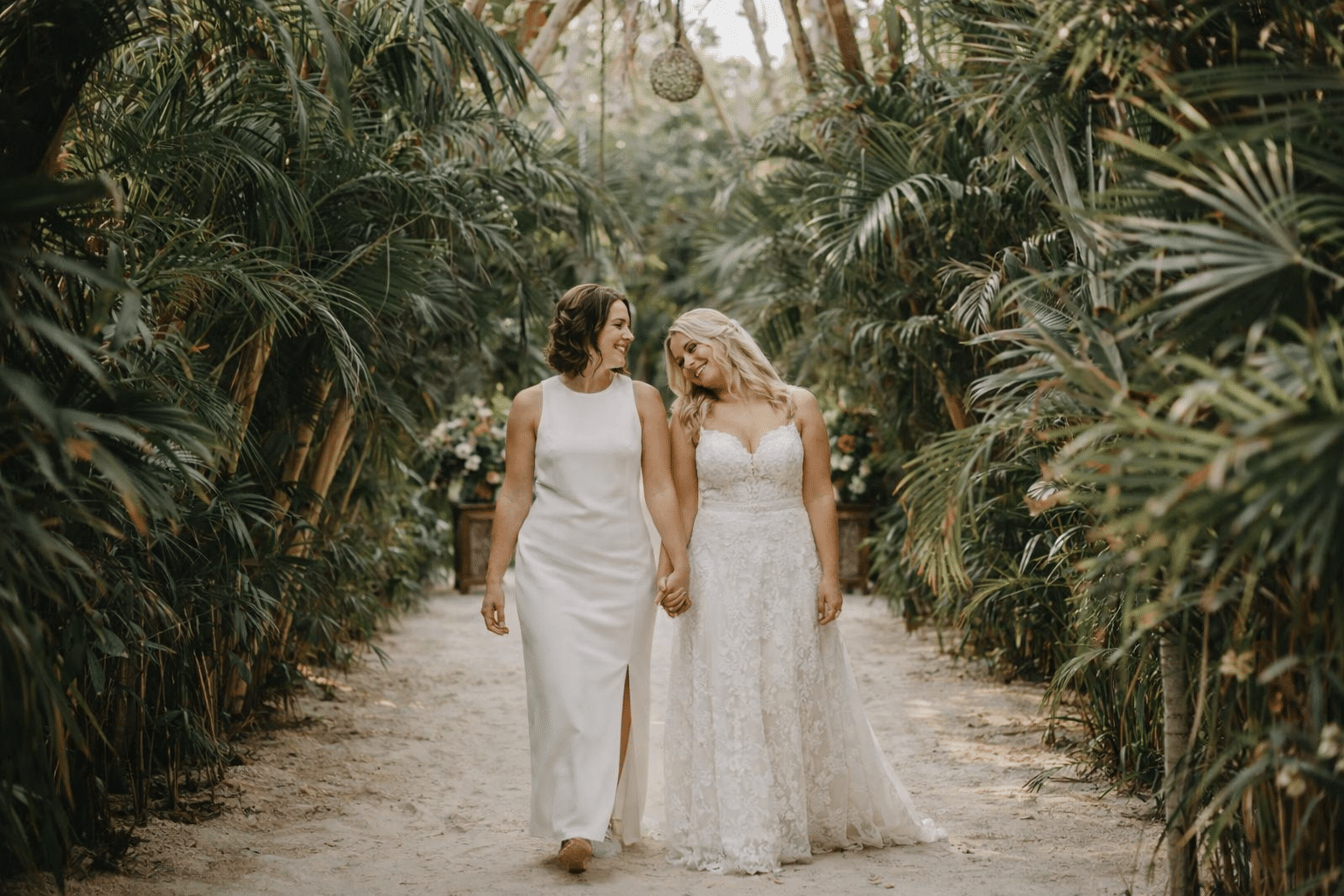
Two brides walking hand in hand through a jungle ceremony path at a Riviera Maya destination wedding

Legal vs. Symbolic Destination Weddings – What’s the Difference?

Destination Wedding Planning

Dana Braun is an internationally-recognized, award-winning travel and destination wedding specialist. She visits dozens of resorts each year and is regarded as an expert in creating, planning, and executing one-of-a-kind travel itineraries in Mexico & the Caribbean. 

(last updated December 2025)

Short Answer: A legal destination wedding requires your marriage to be legally registered in the country where it takes place, often involving extra paperwork and strict timelines. A symbolic destination wedding looks the same but completes the legal paperwork at home, which is why most couples choose it to simplify planning.


This is one of those questions couples don’t always realize they need to ask… until they’re already a few steps into planning.

When most people picture a destination wedding, they assume it has to be legally recognized in the country where it takes place. In reality, that’s just one option. And for almost all of my couples, it’s not the one they choose.

Both legal and symbolic destination weddings are meaningful, valid, and beautiful. The difference usually comes down to logistics, paperwork, and how much extra time and stress you want to take on during the planning process.

What a legal destination wedding actually involves

A legal destination wedding means your marriage is legally registered in the country where you’re getting married. That requires following that country’s specific rules and procedures.

Depending on the destination, this can include things like:

  • Residency requirements
  • Blood tests
  • Original birth certificates and divorce decrees
  • Official translations and notarizations
  • Additional appointments once you arrive
  • Strict timelines that don’t always align with travel plans

None of this makes a legal destination wedding a bad choice. It just makes it more complex.

For some couples, especially those with flexible schedules or strong reasons to marry legally abroad, this option can work well. It simply requires more coordination, patience, and attention to detail.

What a symbolic destination wedding looks like

A symbolic ceremony looks and feels exactly like a wedding. You walk down the aisle. You exchange vows. You celebrate with your guests. From the outside, there is no visible difference.

The only difference is where the legal paperwork happens.

With a symbolic wedding, couples handle the legal marriage at home, usually with a simple courthouse appointment, either before or after the destination celebration. This removes the administrative burden without taking anything away from the wedding experience itself.

This is why almost all of my couples choose a symbolic ceremony. It keeps planning focused on the celebration rather than compliance, and it allows for far more flexibility.

Symbolic weddings make it easier to:

  • Choose your ideal date without legal restrictions
  • Avoid extra appointments and paperwork abroad
  • Keep planning timelines simpler
  • Reduce stress during an already full season of life

It’s not a shortcut. It’s a strategic decision.

Why symbolic doesn’t mean “less real”

One of the biggest misconceptions I hear is that a symbolic ceremony is somehow less meaningful. That idea usually comes from not knowing it’s an option in the first place.

The commitment is real. The vows are real. The marriage is real.

The only thing that changes is where the legal signature happens.

Many couples quietly take care of the legal part at home and treat their destination wedding as the true celebration. Others do it afterward. Either way, the emotional weight of the day doesn’t change.

A reason couples often love symbolic weddings even more

Another reason some couples love choosing a symbolic ceremony is that it gives them a moment that’s just theirs.

They’ll turn the legal part into something intentional. A date day. A quiet moment together before the big celebration. Or a small gathering with a few people who can’t travel, like grandparents or close family members.

For many couples, this becomes something really special. The destination wedding is the shared celebration with everyone they love, and the legal day becomes a private memory they get to keep just for themselves.

There’s no right way to do it. But for the couples who choose this path, it often ends up being one of their favorite parts of the whole experience.

How I help couples decide

When this question comes up, I walk couples through both options early, before anything is locked in. We talk about timelines, priorities, family expectations, and how much extra coordination they realistically want to take on.

There’s no right or wrong answer. There’s only what fits your life, your schedule, and your planning style.

Once couples understand the difference clearly, the decision usually becomes easy. Most choose symbolic because it simplifies things. Others choose legal because it aligns better with their circumstances. Either way, the choice is intentional.

What this really comes down to

Legal and symbolic destination weddings are both great options. The difference isn’t about legitimacy. It’s about logistics.

If you’re comfortable navigating additional paperwork and timelines, a legal ceremony abroad can work beautifully. If you’d rather keep planning streamlined and focused on the experience, a symbolic ceremony often makes more sense.

Once couples realize they have a choice, a surprising amount of stress disappears. And that clarity alone makes the planning process feel lighter from the very beginning.

Dana Braun

considering a destination wedding?

start here

Categories

(last updated December 2025)

Short Answer: A legal destination wedding requires your marriage to be legally registered in the country where it takes place, often involving extra paperwork and strict timelines. A symbolic destination wedding looks the same but completes the legal paperwork at home, which is why most couples choose it to simplify planning.


This is one of those questions couples don’t always realize they need to ask… until they’re already a few steps into planning.

When most people picture a destination wedding, they assume it has to be legally recognized in the country where it takes place. In reality, that’s just one option. And for almost all of my couples, it’s not the one they choose.

Both legal and symbolic destination weddings are meaningful, valid, and beautiful. The difference usually comes down to logistics, paperwork, and how much extra time and stress you want to take on during the planning process.

What a legal destination wedding actually involves

A legal destination wedding means your marriage is legally registered in the country where you’re getting married. That requires following that country’s specific rules and procedures.

Depending on the destination, this can include things like:

  • Residency requirements
  • Blood tests
  • Original birth certificates and divorce decrees
  • Official translations and notarizations
  • Additional appointments once you arrive
  • Strict timelines that don’t always align with travel plans

None of this makes a legal destination wedding a bad choice. It just makes it more complex.

For some couples, especially those with flexible schedules or strong reasons to marry legally abroad, this option can work well. It simply requires more coordination, patience, and attention to detail.

What a symbolic destination wedding looks like

A symbolic ceremony looks and feels exactly like a wedding. You walk down the aisle. You exchange vows. You celebrate with your guests. From the outside, there is no visible difference.

The only difference is where the legal paperwork happens.

With a symbolic wedding, couples handle the legal marriage at home, usually with a simple courthouse appointment, either before or after the destination celebration. This removes the administrative burden without taking anything away from the wedding experience itself.

This is why almost all of my couples choose a symbolic ceremony. It keeps planning focused on the celebration rather than compliance, and it allows for far more flexibility.

Symbolic weddings make it easier to:

  • Choose your ideal date without legal restrictions
  • Avoid extra appointments and paperwork abroad
  • Keep planning timelines simpler
  • Reduce stress during an already full season of life

It’s not a shortcut. It’s a strategic decision.

Why symbolic doesn’t mean “less real”

One of the biggest misconceptions I hear is that a symbolic ceremony is somehow less meaningful. That idea usually comes from not knowing it’s an option in the first place.

The commitment is real. The vows are real. The marriage is real.

The only thing that changes is where the legal signature happens.

Many couples quietly take care of the legal part at home and treat their destination wedding as the true celebration. Others do it afterward. Either way, the emotional weight of the day doesn’t change.

A reason couples often love symbolic weddings even more

Another reason some couples love choosing a symbolic ceremony is that it gives them a moment that’s just theirs.

They’ll turn the legal part into something intentional. A date day. A quiet moment together before the big celebration. Or a small gathering with a few people who can’t travel, like grandparents or close family members.

For many couples, this becomes something really special. The destination wedding is the shared celebration with everyone they love, and the legal day becomes a private memory they get to keep just for themselves.

There’s no right way to do it. But for the couples who choose this path, it often ends up being one of their favorite parts of the whole experience.

How I help couples decide

When this question comes up, I walk couples through both options early, before anything is locked in. We talk about timelines, priorities, family expectations, and how much extra coordination they realistically want to take on.

There’s no right or wrong answer. There’s only what fits your life, your schedule, and your planning style.

Once couples understand the difference clearly, the decision usually becomes easy. Most choose symbolic because it simplifies things. Others choose legal because it aligns better with their circumstances. Either way, the choice is intentional.

What this really comes down to

Legal and symbolic destination weddings are both great options. The difference isn’t about legitimacy. It’s about logistics.

If you’re comfortable navigating additional paperwork and timelines, a legal ceremony abroad can work beautifully. If you’d rather keep planning streamlined and focused on the experience, a symbolic ceremony often makes more sense.

Once couples realize they have a choice, a surprising amount of stress disappears. And that clarity alone makes the planning process feel lighter from the very beginning.

a division of Dana Braun Travel Design

Email

Text Msg

CONTACT: